Booking choice: The Viva Old Manila walking tour, ★ 4.9 (197). Check dates Compare the options below
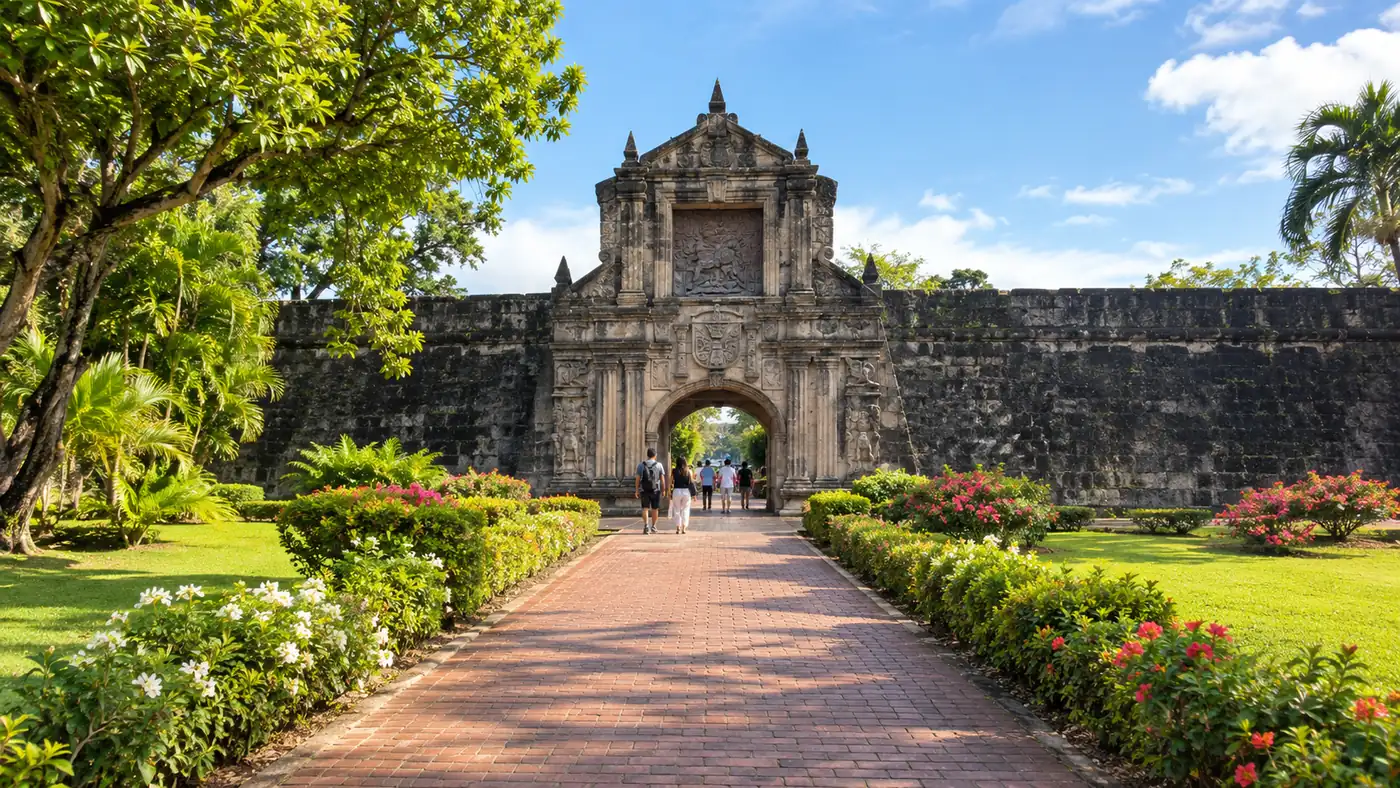
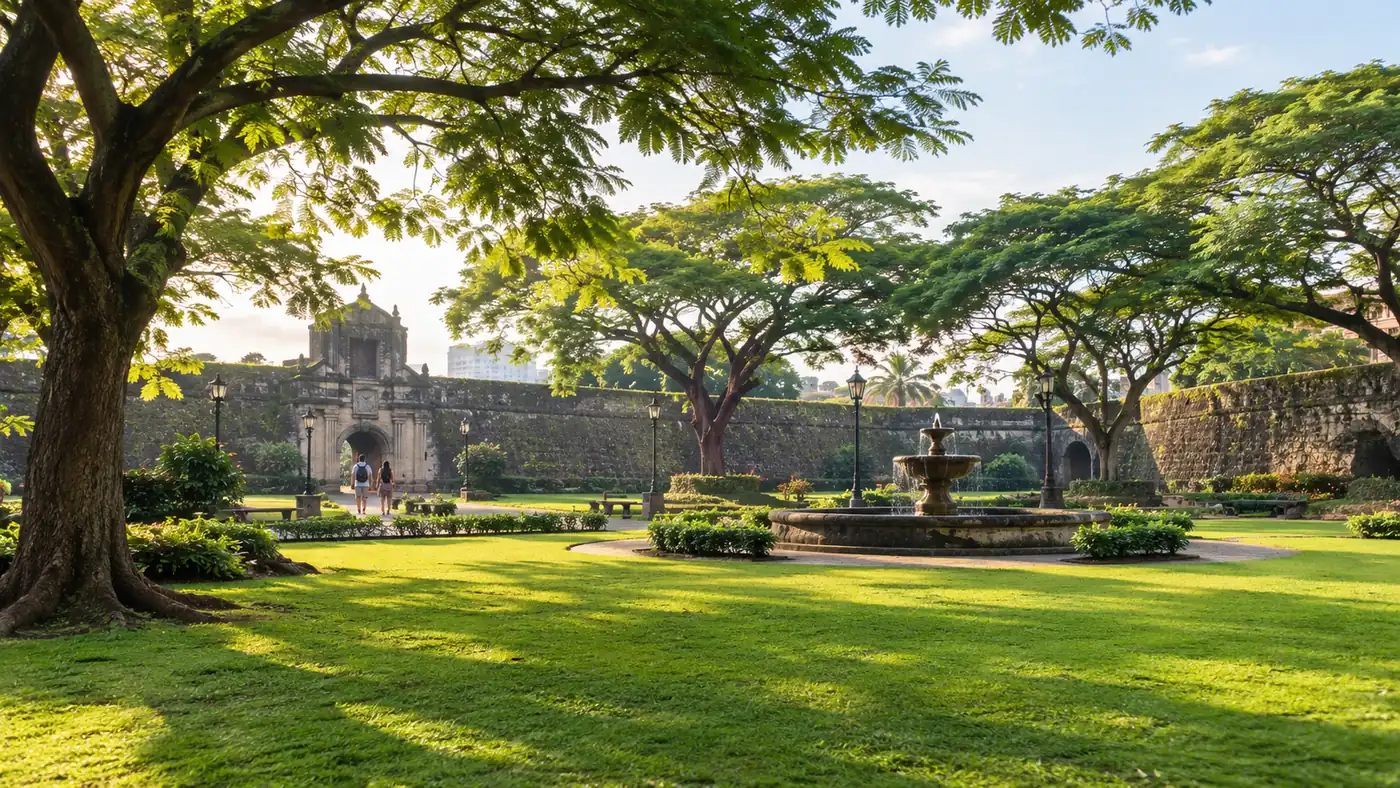
Fort Santiago sits at the northern tip of Intramuros, the old walled city, where the Pasig River meets the city. It is a National Shrine, a public park and a museum in one. It is also one of the lowest-cost historic sites in Manila, open every day and into the evening. The real question is not the ticket, but whether the fort fits your trip, your interests and the weather.
This guide gives you the verdict, what makes the fort unique, a short history, how long to stay, the best time of year and day, who will love it, and a sample half day. The ticket and the hours in detail are in the entrance fee and opening hours guide, and a stop-by-stop walk is in what is inside Fort Santiago.
The quick answer
Verdict: worth it for almost every first visit to Manila. Ticket: low-cost, one regular rate for Filipinos and foreign visitors, a reduced rate for students, seniors and visitors with disabilities with ID; it covers the grounds, the Rizal Shrine and the dungeons. Time: 2 to 3 hours for the fort, a half day with the rest of Intramuros. Age: the stone fort is more than 430 years old, and the site has been fortified since 1571. Best months: January to March, dry and not yet at the peak of the heat. Best hours: early morning (from 6 am at weekends) or late afternoon. Note: the Rizal Shrine museum is closed on Mondays. Less ideal for: visitors who need shade and air conditioning all the time, and children under 13 who hope to see the dungeons.
Is Fort Santiago worth visiting in 2026?
Yes. It is one of the lowest-cost historic sites in Manila, and in 2 to 3 hours you see where Manila began, where Rizal spent his last days and where the Second World War left its deepest marks on the city.
The fort is open every day in 2026, and nothing needs booking ahead. You buy a ticket at the entrance on Plaza Moriones, by cash, GCash or Maya, or reserve online through the Intramuros Administration. One ticket covers the grounds, the Rizal Shrine (Museo ni Rizal) and the dungeons. For that, you get shady lawns, stone walls, a moat, a museum and a river view in one visit.
The Intramuros Administration lists the fort first among the sites of the walled city, and it is the stop most tours build their route around. If you have only one sight in Manila, make it this one, and add the streets of Intramuros around it. The tours that go inside are compared on the homepage.
What makes Fort Santiago unique?
Three stories meet on one small site: the settlement of Rajah Sulayman and the founding of Spanish Manila, the last days of José Rizal, and the war of 1942 to 1945. No other place in Manila holds all three.
- Where Manila began: before 1571 this river mouth held the palisade of Rajah Sulayman's Maynila. Miguel López de Legazpi founded Spanish Manila here on 24 June 1571.
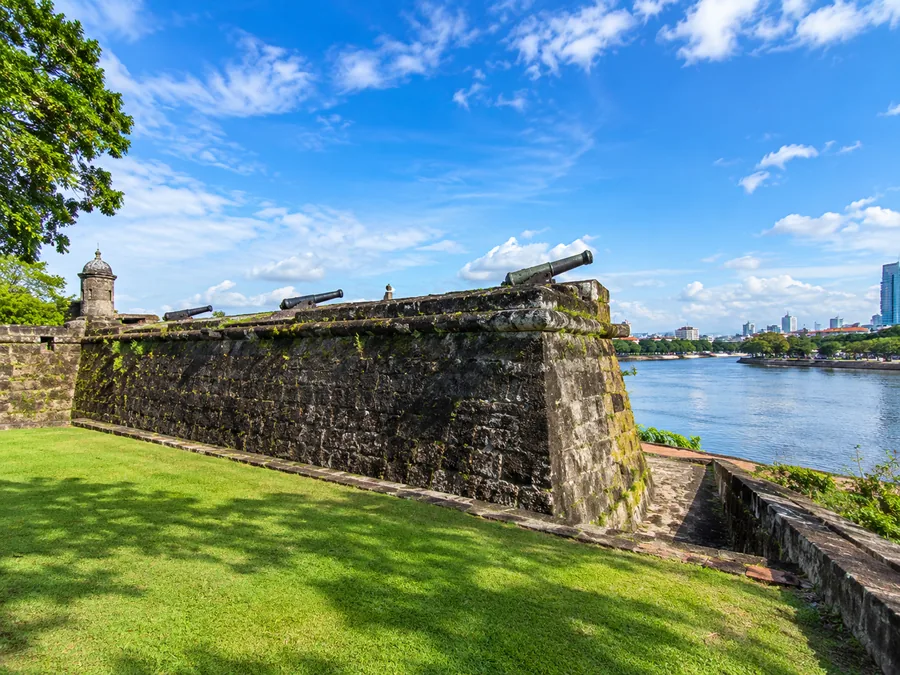
- A stone fort still standing: the walls were raised in the early 1590s under Governor Gómez Pérez Dasmariñas, which makes it one of the oldest stone forts in Manila.
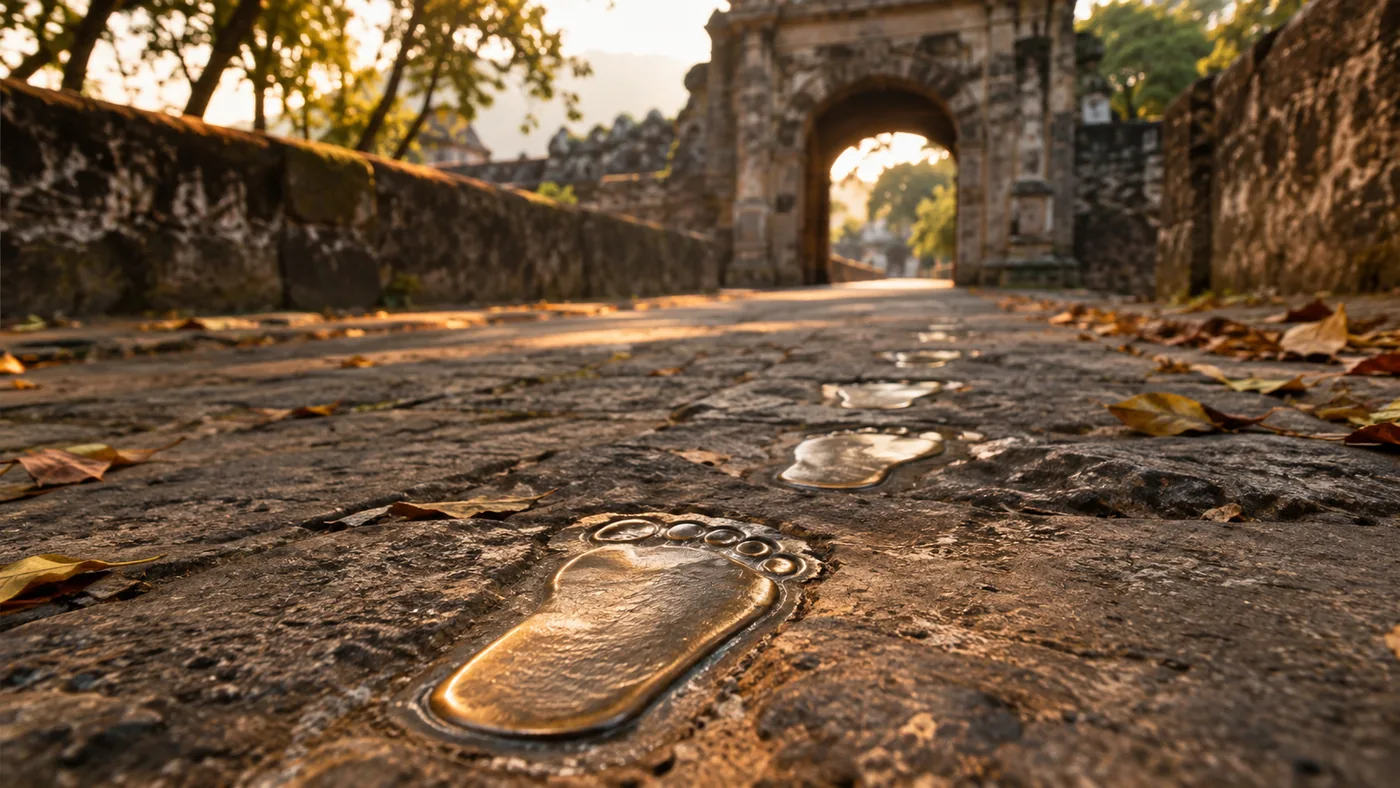
- Rizal's last days: the national hero was held here in 1896. His cell, his belongings and the bronze footprints of his last walk are part of the visit.
- A National Shrine: the fort was declared a National Shrine in 1951, remembering those who suffered here.
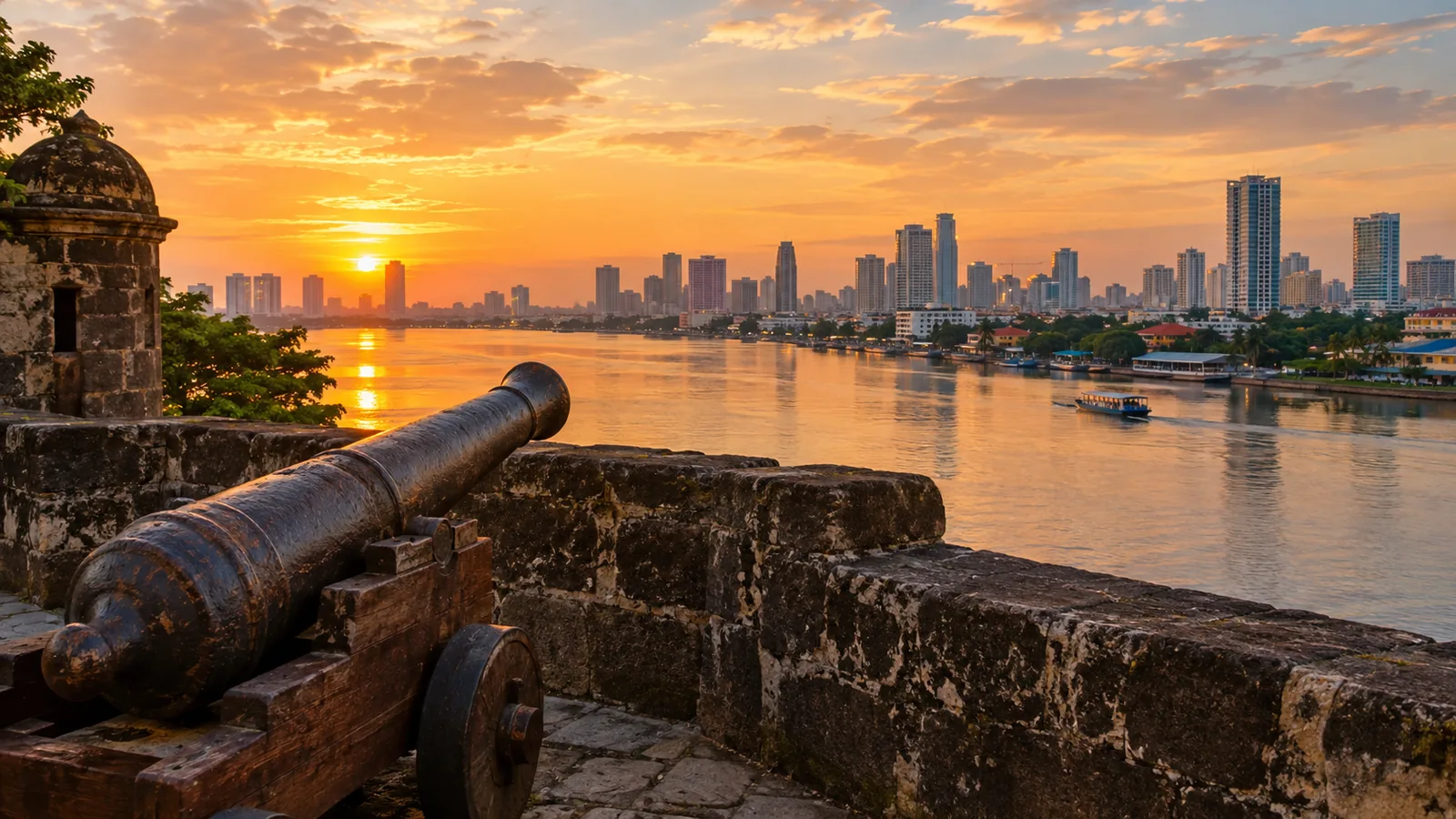
- The river view: the Baluarte de Santa Barbara, the highest bastion, looks straight over the Pasig River.
How old is Fort Santiago, and what happened there?
The stone fort is more than 430 years old: its walls were raised in the early 1590s. The site itself has been fortified since 1571, and before that by the palisade of Rajah Sulayman.
- Before 1571: a palisade of logs and earth protects Rajah Sulayman's settlement of Maynila at the mouth of the Pasig River.
- 24 June 1571: Miguel López de Legazpi founds the Spanish city of Manila, and a wooden fort goes up on the site.
- 1574: the wooden fort is destroyed in the attack of the pirate Limahong.
- Early 1590s: the stone fort is raised under Governor Gómez Pérez Dasmariñas.
- 1762 to 1764: the British capture Manila and hold it for two years.
- 1896: José Rizal is held here from 3 November to 29 December before his execution at Bagumbayan.
- 13 August 1898: the American flag is first raised over the fort.
- 1942 to 1945: the dungeons become a military police prison. Hundreds of prisoners died in the dungeons in February 1945, and the fort was badly damaged in the Battle of Manila.
- 1951: Fort Santiago is declared a National Shrine.
- 1979: the Intramuros Administration is created to restore the walled city.
The whole timeline told on the spot: an hour inside the fort with a DOT-accredited guide, the dungeons and the bastion, then the cathedral and San Agustin.
Check dates for the Viva Old Manila walking tourAre Intramuros and Fort Santiago the same place?
No. Intramuros is the whole walled city, with public streets, churches and museums, and you need no ticket to walk its streets and walls. Fort Santiago is the citadel at its northern tip, by the Pasig River, with its own ticket.
Think of Intramuros as the old town and Fort Santiago as its castle. You can walk into Intramuros through any of its gates at any time, visit Manila Cathedral (open to everyone, no ticket needed) and walk long stretches of the walls. Some sites inside charge their own ticket: San Agustin Museum costs more than Fort Santiago, and Casa Manila and the Baluarte de San Diego have their own entry too.
Many tours sold as Fort Santiago tours are really Intramuros tours, and not all of them go inside the fort. Intramuros tours compared shows which ones do.
How much time do you need at Fort Santiago?
2 to 3 hours for a full visit to the fort. With the rest of Intramuros, plan a half day of about 4 to 5 hours.
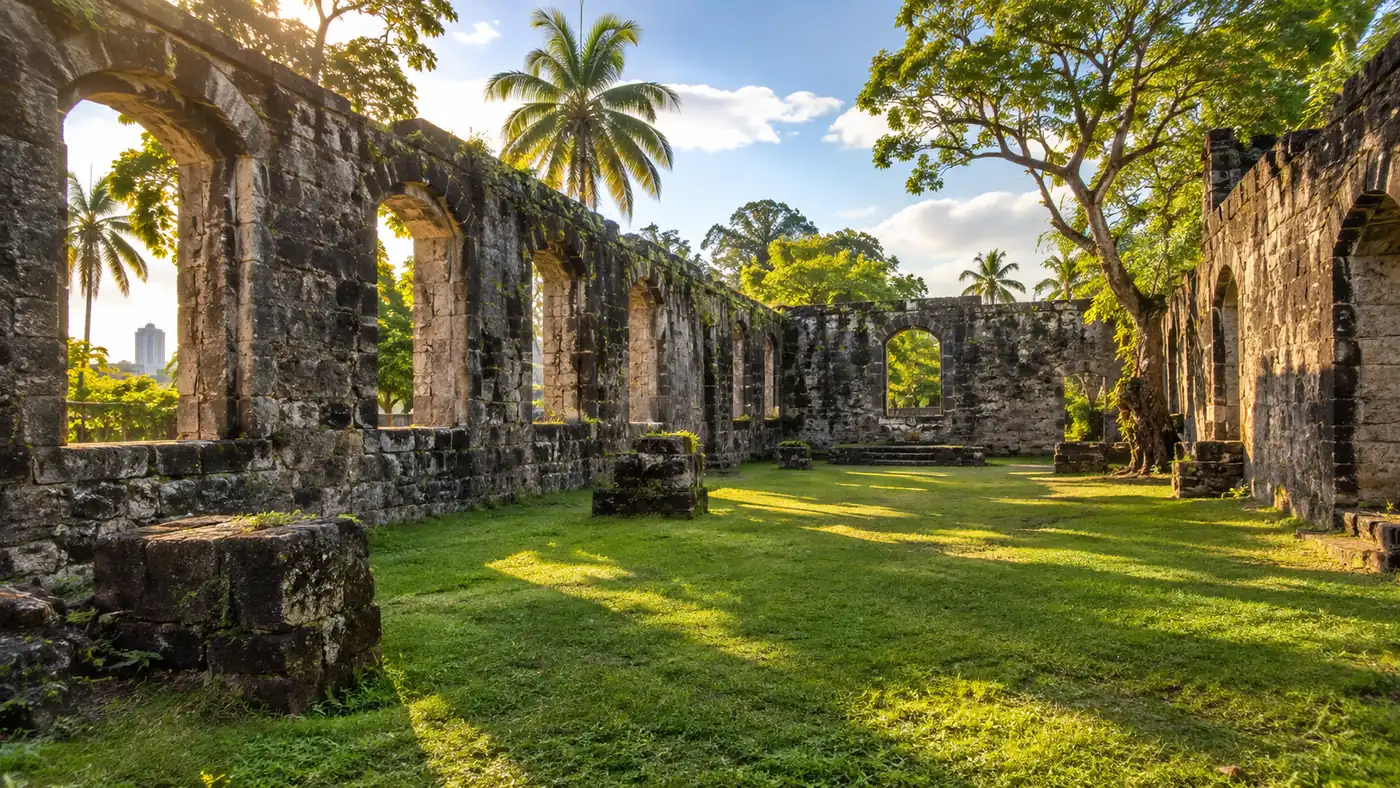
A quick visit of about an hour covers the gate, Plaza de Armas, the Rizal Shrine and the view from the bastion. With 2 to 3 hours you also see the dungeons, the White Cross memorial, the barracks ruins, the Almacenes Reales and the short film in the Intramuros Visitors Center, with time to sit in the shade. The Visitors Center also has a cafe and restrooms, which helps on a hot day.
Guided tours usually spend about an hour inside the fort and the rest of the time in Intramuros. That is enough for the main stories, but if Rizal matters to you, plan extra time on your own in the Rizal Shrine. The order of the stops is in what is inside Fort Santiago.
When is the best time to visit Fort Santiago?
January to March, early in the morning or late in the afternoon. The dry season runs from December to May, April and May are the hottest months, and the rainy season runs from June to November.
The fort is open every day, from 8 am on weekdays and 6 am at weekends, into the evening. The Intramuros Administration lists closing at 10 pm with last entry from 8 pm, and another of its pages gives shorter hours, so check the official hours page before a late visit. The Rizal Shrine museum is open Tuesday to Sunday, 9 am to 4 pm; closed on Mondays. Midday is the hardest time: the lawns and walls have little shade. Typhoons come mostly from August to October; on days with a typhoon signal, check the Intramuros Administration page before you go.
| Month | Weather | Verdict |
|---|---|---|
| January to March | Dry, warm, the most comfortable | The best months; still go early or late |
| April and May | Dry and the hottest of the year | Early morning only, with water and a hat |
| June and July | Rainy season begins, showers | Fine between showers; bring an umbrella |
| August to October | Rainy, with most typhoons | Keep a flexible day and check the weather |
| November | Rains ease | Good, with fewer visitors |
| December | Dry season returns, humid | Good; busy around the holidays |
Beat the heat on a handmade bamboo bike: a flat, easy route around the walls with a guide, a drinks stop and ice cream at the end.
Check dates for the bamboo bike tourWho will love Fort Santiago, and who may not?
History lovers, first-time visitors to Manila and families with older children will love it. Visitors who need constant shade or air conditioning, or who expect a large indoor museum, may find it less rewarding.
- You will love it if: you like history told on the spot, old stone walls, quiet lawns and river views, or you want to understand Rizal and the Philippines.
- Families: children enjoy the moat, the walls and the cannons. The dungeons are for visitors aged 13 and over, in small groups, in silence.
- Photographers: the gate, the barracks ruins and the bastion are best in soft morning or evening light.
- Less ideal if: heat tires you quickly. There is little shade between the sights, so midday in April or May is hard work.
- Less ideal if: you expect a full indoor museum. Much of the fort is ruins and open ground; the Rizal Shrine and the Visitors Center are the indoor parts.
- Mondays: the grounds are open, but the Rizal Shrine museum is closed.

A cooler way in: an hour at Fort Santiago as evening falls, then the lit cathedral and San Agustin, with a guide who shows old photos of the fort on a tablet. Rated 4.9 from 30 reviews.
Explore the Night in Old Manila walkWhat does a good half day in Intramuros look like?
Start at Fort Santiago early, walk south to Manila Cathedral and San Agustin Church, stop for lunch, then finish on the walls in the late afternoon.
- 8 am (6 am at weekends): Fort Santiago, while it is cool. Allow 2 hours; the Rizal Shrine opens at 9 am.
- 10:30 am: walk to Manila Cathedral, open to everyone, no ticket needed.
- 11 am: San Agustin Church, completed in 1607, the oldest stone church in the Philippines, and its museum, which costs more than the fort.
- 12:30 pm: lunch around Plaza San Luis, and time out of the sun.
- 2 pm: Casa Manila, a recreated Spanish-era house across the street.
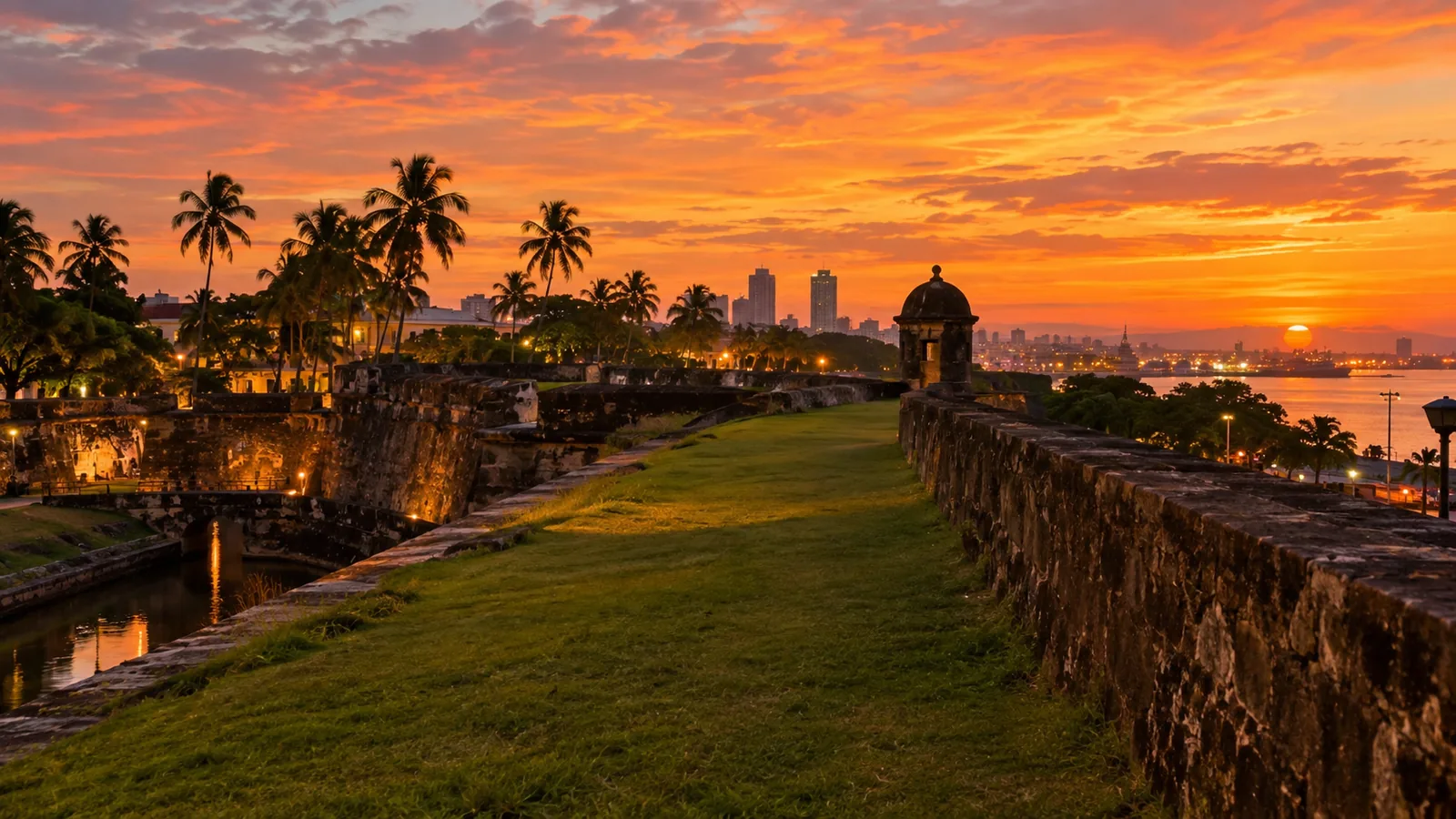
- 4 pm: walk the walls or visit the Baluarte de San Diego, and watch the light go.
Cover your shoulders and knees for the churches. The fort itself has no strict dress code. Getting there is in how to get to Fort Santiago.
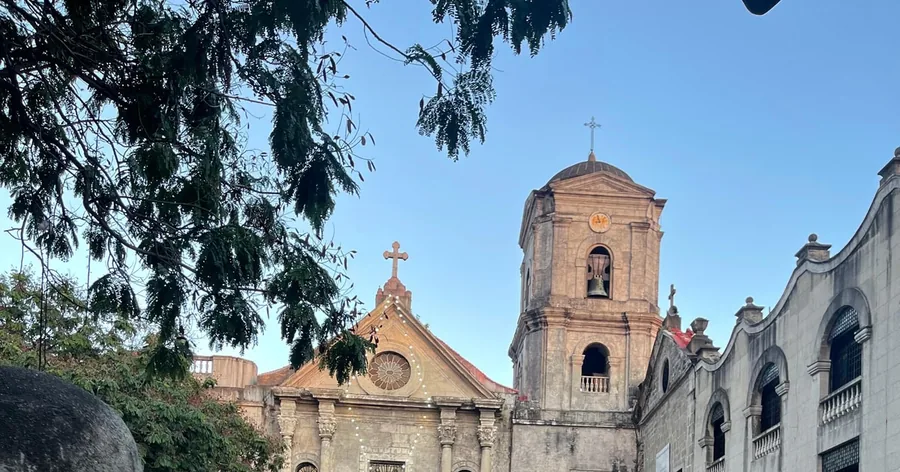
End the day on a rooftop: the walled city by bamboo bike in the late afternoon, then the sunset over Manila with a drink included.
Check dates for the sunset bamboo bike tourFrequently asked questions
What is the safest part of the Philippines for tourists?
Well-visited heritage districts and resort islands are the easiest places for a first trip. In Manila, Intramuros is among the calmest parts of the city: a well-kept heritage district with site staff and tourist police, safe to explore with the usual city care. Fort Santiago, at its northern tip, is a quiet, well-kept park.
Is Fort Santiago worth it on a Monday?
Yes for the grounds, the walls, the dungeons and the river view, but the Rizal Shrine museum is closed on Mondays. If Rizal is the reason you are going, pick another day.
Do I need a guide to enjoy Fort Santiago?
No. The fort has signs, a Visitors Center with a short film and models, and the Rizal Shrine. A guide adds the stories and joins the fort to the rest of Intramuros; DOT-accredited guides can also be hired at a booth inside.
Is Fort Santiago worth visiting in the rainy season?
Yes, between showers. The fort is quieter, the lawns are green, and the Rizal Shrine and Visitors Center give you somewhere dry. Check the Intramuros Administration page on days with a typhoon signal.
Ready to book
Choose your tour
Check your date and the live price on GetYourGuide; the refund terms are shown on each option.
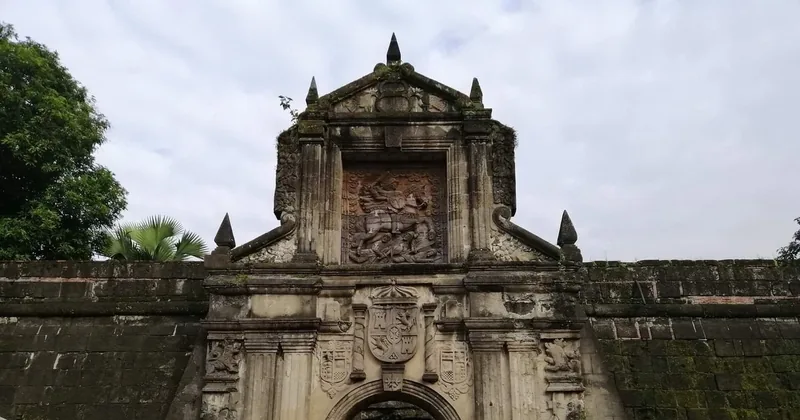
Viva Old Manila! Intramuros Walking Tour
- About an hour inside Fort Santiago with a DOT-accredited guide
- The dungeons and the Baluarte de Santa Barbara
- Manila Cathedral, the Memorare Manila 1945 memorial and San Agustin Church
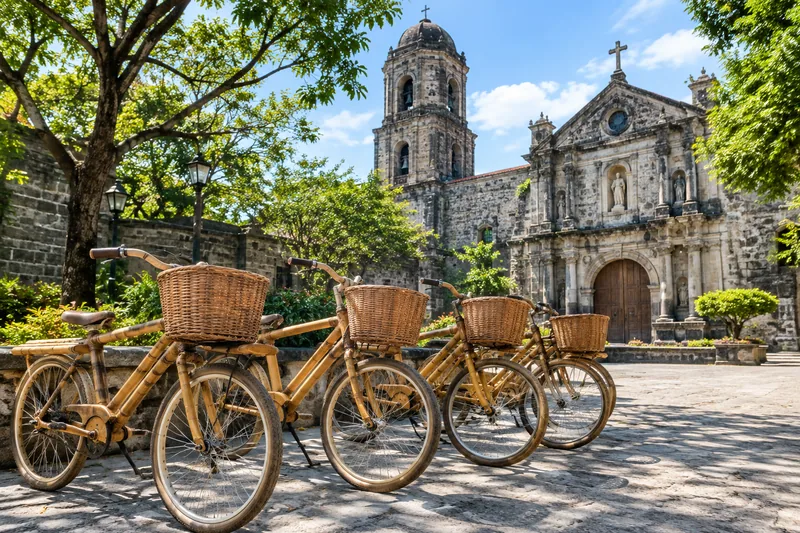
Intramuros Historical Bamboo Bike Tour
- A local guide on the full three-hour route
- A bamboo bike and a helmet, rain ponchos if needed
- Entrance fees on the full tour; the two-hour express option skips Fort Santiago

Sunset Bamboo Bike Tour in Intramuros
The walled city by bamboo bike in the late afternoon, ending with the sunset from a rooftop deck